Shop now, pay later in 4 easy installments

daily habits
How to Start a Daily Journaling Habit (Even If You've Tried Before)

Most people who try journaling stop within two weeks.
Not because they're lazy. Not because they don't care. They stop because they sit down with a blank page, stare at it, write something that feels forced, close the journal, and never come back.
If that sounds familiar, the problem wasn't you. It was the approach.
Here's what actually works, the simple way to begin again, even if journaling has never stuck for you before.
Want the full behavioural-science breakdown? Read how to build a journaling habit that actually sticks.
Why Most Journaling Habits Fail in the First Place
Behavioural scientist Dr BJ Fogg from Stanford University spent years studying why habits succeed and fail. His research found one consistent culprit: we set the bar too high at the start.
We tell ourselves we'll write three pages every morning. We buy a beautiful journal, sit down with our coffee, and promptly feel like we have nothing meaningful to say. The blank page is intimidating. The expectation is enormous. The habit collapses before it even begins.
Dr Fogg's solution? Shrink the behaviour until it requires almost no effort at all.
This is what he calls a "Tiny Habit", an action so small it bypasses your brain's resistance entirely. Instead of "I'll journal every morning," the goal becomes "I'll write one sentence after I make my coffee." That's it. One sentence.
What happens next is predictable: on most days, you write more than one sentence. But on the days you don't, you've still won. You've kept the habit alive.
The Science of Why Journaling Works
Before we get into the how, it helps to understand the why, because when you understand what's actually happening in your brain, the habit becomes easier to maintain.
Dr James Pennebaker, a psychologist at the University of Texas, has studied the effects of expressive writing for over three decades. His research found that people who wrote about their thoughts and feelings for just 15 to 20 minutes over several days showed measurable improvements in immune function, emotional regulation, and overall wellbeing.
The mechanism is what Pennebaker calls "inhibition theory." When we don't process our thoughts and emotions (when we just carry them around) our brain expends a significant amount of energy suppressing them. Writing them down releases that suppression. It's cognitive offloading. The brain no longer needs to hold onto things it's already externalised.
More recent research from the Greater Good Science Centre at UC Berkeley confirms this. Regular reflective writing activates the prefrontal cortex, the part of your brain responsible for rational thinking and decision-making, while simultaneously calming the amygdala, the brain's threat-detection centre. In plain terms: journaling helps you think more clearly and feel less reactive.
The Blank Page Problem (And How to Solve It)
Even knowing all of this, the blank page remains one of the biggest barriers to consistent journaling. Without structure, most people don't know where to start.
This is why prompted journals outperform blank notebooks for building a daily habit. When the page already has a question on it ("What is one thing I want to focus on today?") the cognitive load drops dramatically. You're not generating content from nothing. You're responding to a prompt, which is a far easier mental task.
Research on implementation intentions, pioneered by psychologist Peter Gollwitzer, found that people who had a specific plan for how and when to perform a behaviour were significantly more likely to follow through than those who simply intended to do it. A structured journal effectively builds those implementation intentions into the format itself.
How to Actually Start (The Right Way)
Here's a method backed by behavioural science, not willpower.
1. Attach it to something you already do.
Habit stacking (linking a new behaviour to an existing one) is one of the most well-researched methods for habit formation. Pick something you already do every day without thinking: making your morning coffee, brushing your teeth, sitting down for lunch. Your journal goes right after that action. Every single time.
2. Keep it short to begin with.
Set a time limit of five minutes for the first two weeks. Not "write until you feel done." Five minutes, full stop. This removes the pressure of producing something significant and trains your brain to associate journaling with ease rather than effort.
3. Use prompts, not blank pages.
Questions are far easier to respond to than an open page. Start with something simple: What do I want today to feel like? What am I grateful for right now? What is one thing I'm carrying that I need to put down?
4. Track it visibly.
Seeing a streak of completed days creates what psychologist B.F. Skinner identified as a reinforcement loop. Each tick or checkmark becomes a small reward that motivates the next one. Don't break the chain.
5. Show up even on off days.
Your worst day of journaling (even a single line) is worth more than a skipped day. Consistency builds the neural pathway. Quality comes later.
What to Expect in the First 30 Days
Weeks one and two will feel awkward. That's normal. You're building a new neural pathway, and new pathways take repetition to solidify.
By week three, most people find they're writing more than they planned. The resistance shrinks. Thoughts start to flow more easily. You'll notice you're processing things faster. A difficult conversation, a stressful decision, a feeling you couldn't quite name, there's somewhere to put it all now.
By day 30, journaling shifts from something you do to something you miss when you don't.
A Note on Structure
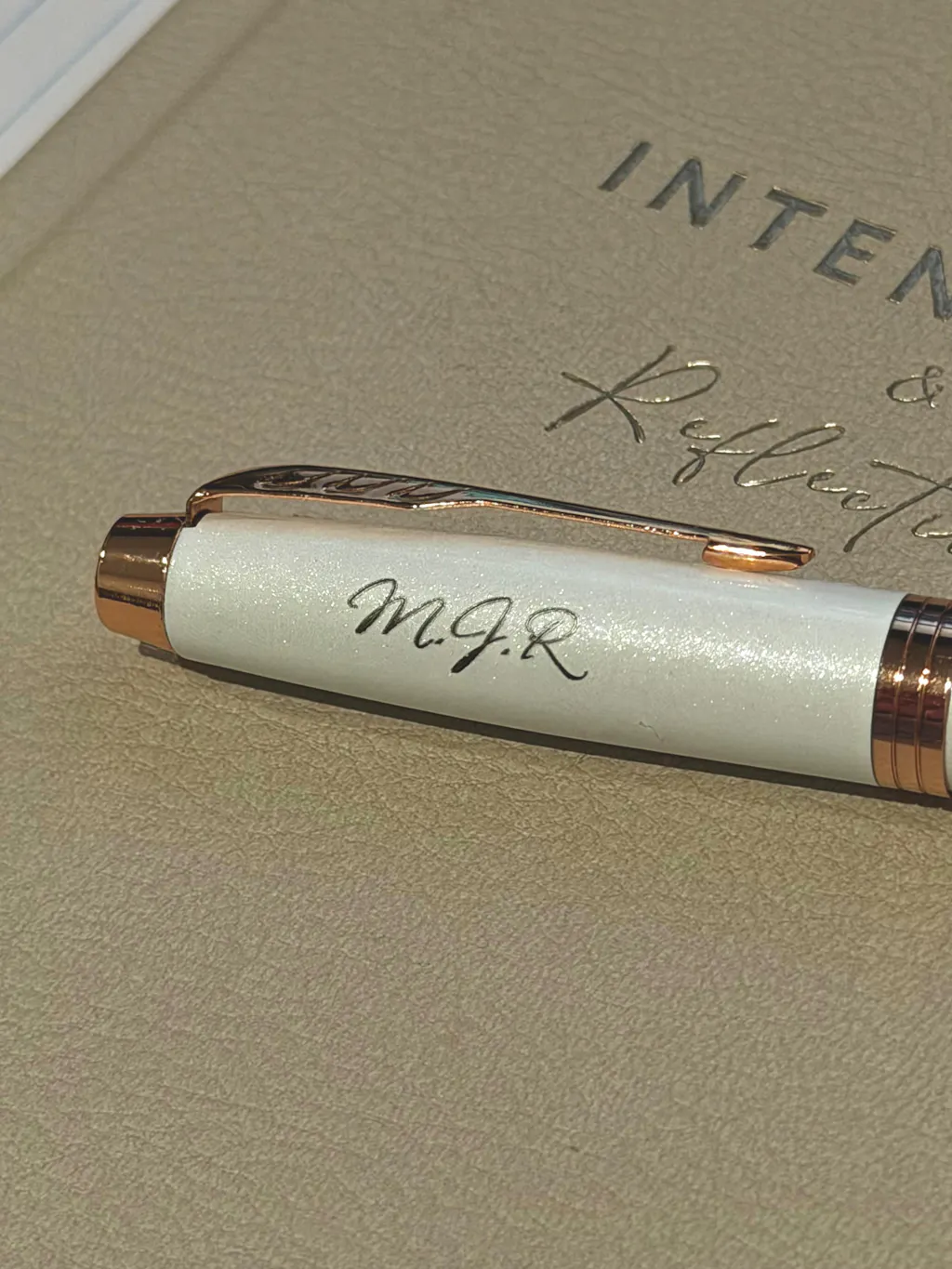
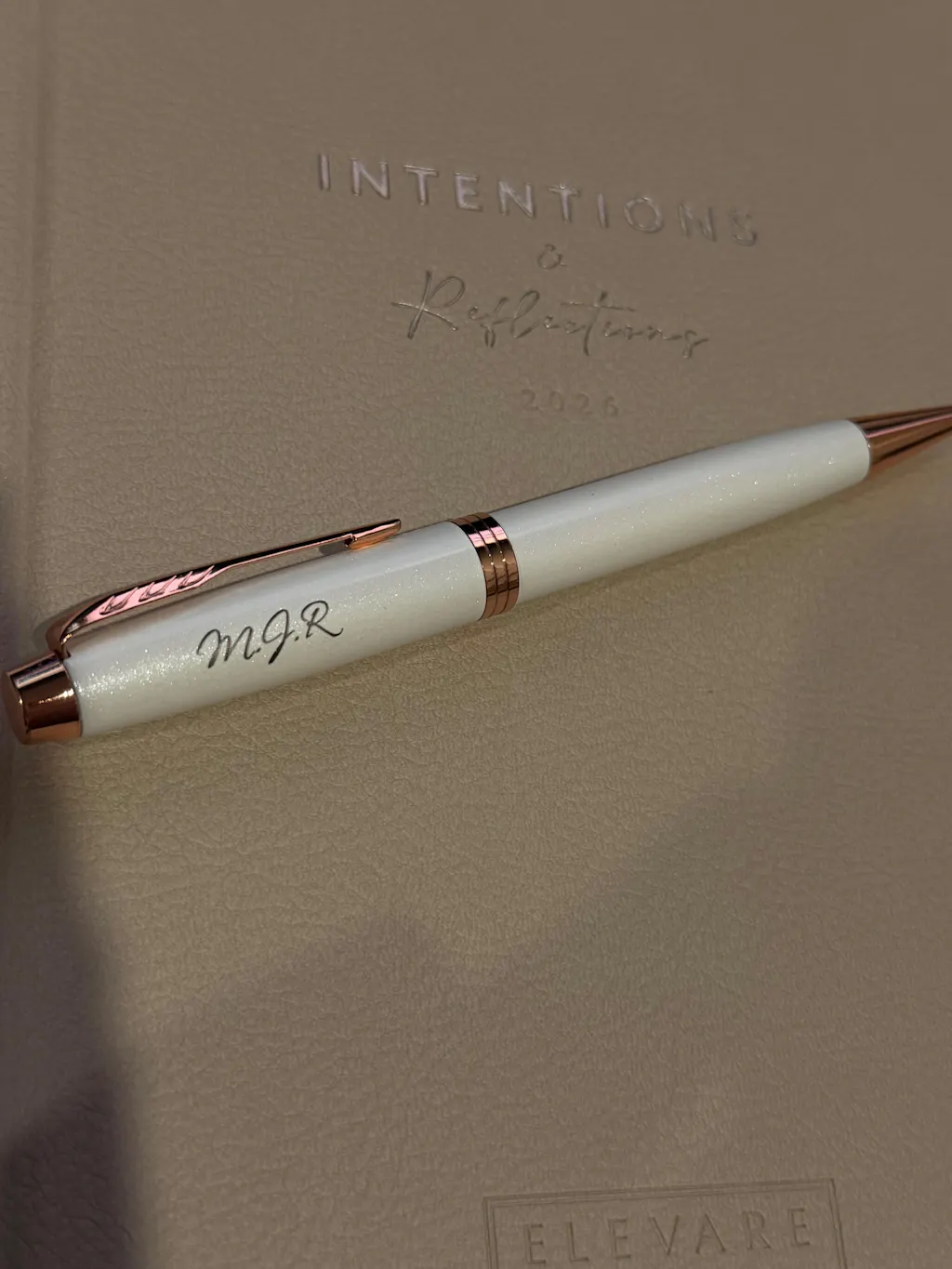
If you want to skip the setup phase entirely, a structured intentions journal removes most of the decisions that cause people to quit. Ours (the Elevare Collective Intentions & Reflections Journal) is built around monthly intentions, weekly planning, daily reflection prompts, and a habit tracker across 262 pages. The structure is already there. You just show up and respond.
But whether you use a structured journal or a plain notebook, the principles above apply. Start small, stay consistent, and trust the process.
The blank page is only intimidating until you have a pen in your hand.
Ready to start? The Elevare Collective journal is designed to take the guesswork out of daily journaling, with structured prompts for every week of the year.